
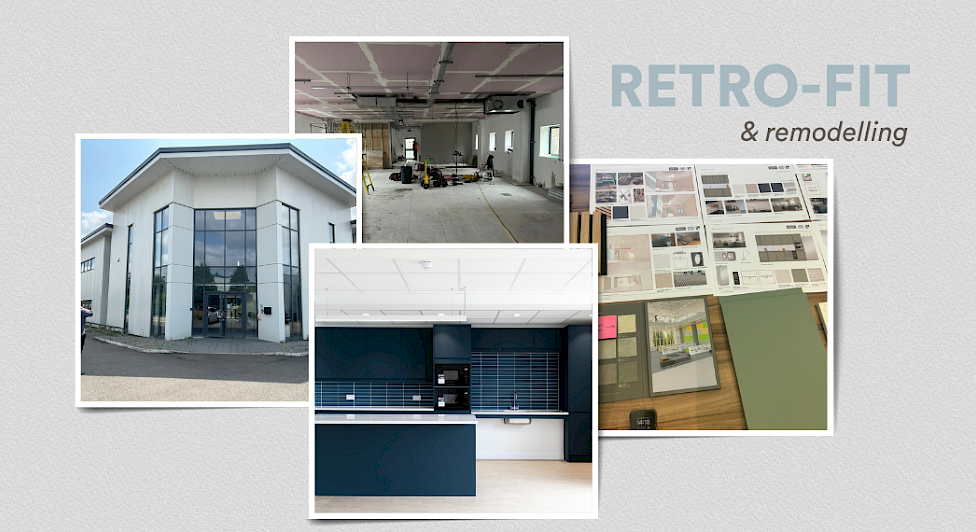
With increasing pressure to deliver high-quality, financially viable developments, we explore the commercial, environmental, and operational benefits of retrofit and remodelling existing buildings.
In today’s commercial property landscape, the pressure to deliver high-quality, financially viable developments is higher than ever. While redevelopment has traditionally been the go-to approach for maximising returns on underutilised sites, there is growing recognition of the commercial, environmental, and operational benefits of retrofit and remodelling existing buildings.
Why retrofit and remodelling can be more commercially viable
Redevelopment can be costly, time-consuming, and complex. Beyond the purchase of land or an existing property, developers often face significant planning, construction, and regulatory hurdles. For many projects, these challenges can erode profitability or introduce unacceptable risk.
In contrast, upgrading or remodelling an existing building can unlock value in ways that redevelopment cannot. By retaining the core structure and reconfiguring the layout, businesses can:
- Reduce construction costs – Salvaging structural elements, foundations, and building envelopes can significantly reduce capital outlay compared to a full rebuild.
- Shorten project timelines – Retrofitting avoids the extended planning and demolition stages associated with redevelopment, allowing buildings to return to productive use faster.
- Minimise regulatory obstacles – Existing buildings often benefit from established use rights, simplifying planning applications and sometimes bypassing complex zoning restrictions.
- Enhance sustainability credentials – Reusing materials and structures reduces embodied carbon and waste, aligning with both environmental regulations and ESG goals.
These advantages make retrofit particularly attractive in dense urban areas or for commercial properties where the value of location outweighs the potential gains of starting from scratch.
When retrofitting makes sense
Not every building is a candidate for retrofit. The most suitable projects typically involve properties that have solid structural bones but may be functionally outdated, inefficient, or poorly configured for modern use. Examples include:
- Office buildings that require modern layouts, flexible floor plates, or energy efficiency improvements to attract tenants.
- Residential blocks where updating interiors, services, and façades can increase rental yields without the expense of full redevelopment.
- Retail or mixed-use properties seeking to adapt to changing market demands, such as converting surplus office space into apartments or co-working environments.
A thorough feasibility study is essential to determine whether retrofit delivers the desired financial and operational outcomes. This analysis should consider not just the upfront costs but also potential uplift in rental or sale values, operational savings, and compliance with building regulations.
Maximising value through thoughtful design and technical delivery
Successful retrofit projects rely on careful design and technical expertise. Architects and consultants must balance respect for the existing structure with the need to deliver efficient, modern spaces. At OSG Architecture, we work as part of a design team, collaborating with specialist consultants to combine early-stage concept design, technical delivery, and detailed compliance management to ensure that each retrofit project unlocks maximum value while mitigating risk.
Key considerations include:
- Structural assessment – Understanding load capacities and limitations is crucial to avoid costly surprises.
- M&E upgrades – Modern heating, ventilation, and electrical systems improve energy performance and user comfort.
- Façade and envelope improvements – Enhancing thermal efficiency and aesthetic appeal can increase both marketability and operational savings.
- Flexibility for future use – Anticipating evolving tenant needs ensures the building remains commercially relevant for years to come.
Retrofit and remodelling are no longer niche strategies - they are practical, commercially savvy approaches to property development. When undertaken with careful planning, robust technical delivery, and a clear understanding of the building’s potential, these projects can provide faster returns, lower risk, and a sustainable solution that aligns with modern environmental and operational expectations. For developers and investors looking to maximise value without the disruption and cost of full redevelopment, retrofit offers a compelling alternative.