
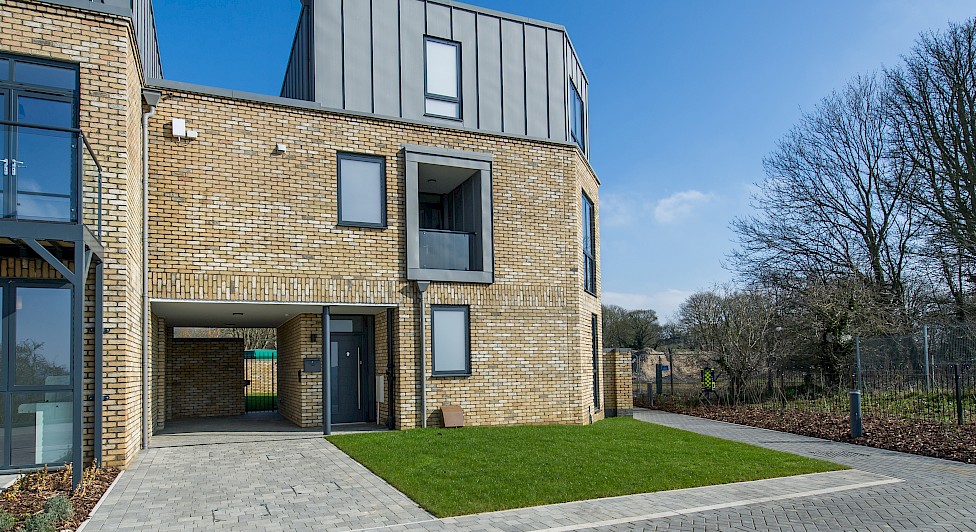
The Future Homes Standard represents an important step in the wider transition towards lower-carbon development, but the industry conversation is already moving beyond minimum standards.
The Future Homes Standard is now firmly influencing the direction of residential development across the UK, driving higher expectations around energy performance, operational efficiency and sustainable design.
For developers, investors and project teams, the conversation is no longer simply about regulatory compliance. Sustainability considerations are increasingly shaping planning outcomes, influencing viability discussions and affecting the long-term commercial performance of residential assets.
As local authorities continue to strengthen environmental requirements and occupiers become more conscious of energy use and running costs, the industry is seeing a clear shift towards better-performing, future-ready housing.
At OSG Architecture, we see this as an opportunity to deliver smarter developments that balance sustainability, commercial viability and practical delivery.
Raising the benchmark for residential development
The Future Homes Standard is in place to significantly reduce operational carbon emissions from new homes through improved building performance and lower-carbon design strategies.
In practical terms, this means residential schemes must place greater focus on:
· Building fabric performance
· Reduced energy demand
· Low-carbon heating systems
· Airtightness and ventilation co-ordination
· Long-term operational efficiency
· Measurable building performance outcomes
These principles are already influencing planning policy and technical design requirements, particularly on larger or more commercially driven developments.
For developers, this creates both challenges and opportunities. Decisions made during feasibility, planning and early-stage design now have a greater impact on future compliance, programme certainty and whole-life asset performance.
Why early-stage sustainability matters
Sustainable performance cannot be achieved through specification alone. The most successful outcomes are created when sustainability is integrated into the project strategy from the outset.
Early design co-ordination allows project teams to make informed decisions around massing, orientation, fabric efficiency, servicing strategies and energy performance before schemes become constrained by programme or cost pressures.
This early input can help reduce redesign risk, improve planning outcomes and support more efficient project delivery.
At OSG, our sustainability approach is closely aligned with wider architectural and technical delivery services, ensuring environmental performance is considered alongside buildability, co-ordination and commercial objectives.
Our work can include:
· Passive design and energy reduction strategies
· BIM-led design co-ordination and analysis
· Building fabric optimisation
· Integration of low-carbon technologies
· Retrofit and refurbishment strategies
· Sustainable masterplanning principles
· Technical co-ordination to support compliance and delivery
By embedding sustainability into the wider development strategy, project teams are better positioned to deliver schemes that are efficient, commercially resilient and aligned with evolving policy expectations.
Looking beyond minimum compliance
The Future Homes Standard represents an important step in the wider transition towards lower-carbon development, but the industry conversation is already moving beyond minimum standards.
Developers are increasingly looking at how sustainability can support long-term asset value, reduce operational costs and improve the overall quality and marketability of residential schemes.
At the same time, planning authorities and stakeholders are placing greater emphasis on measurable environmental performance and responsible development.
For design teams, this means sustainability can no longer be treated as a standalone consideration. It must form part of an integrated design and delivery strategy from the earliest stages of a project.
As expectations continue to evolve, the ability to combine sustainable thinking with commercially focused, technically deliverable design will become increasingly important across the residential sector.